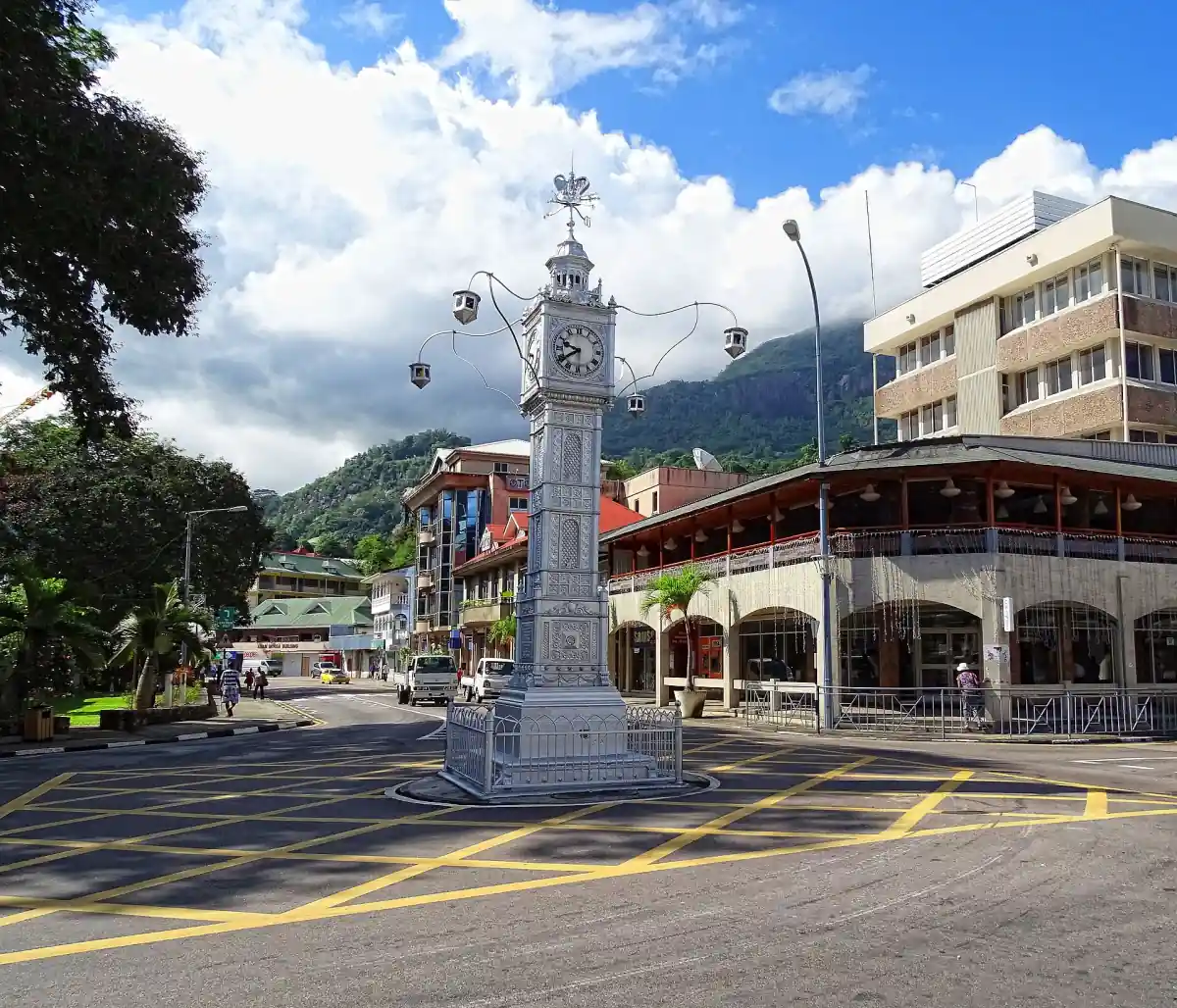
Finding the best time to visit Victoria Seychelles
The best time to visit Victoria Seychelles depends on how much of your itinerary takes place on land or at sea. The seasonal climate guide describes January as the height of the rainy season, June and July as relatively dry, and July and August as particularly windy with rough seas. April is a transition with weak, variable winds, but it is also especially warm. Choose your travel period around those differences, then use the forecast for decisions on the day.
A city visit and a boat excursion have different practical demands. For walking between sights, leave room for breaks from humid heat and for rain to change the order of your stops. For a crossing or excursion at sea, keep the operating decision tied to local conditions. A comparatively dry period on land is not a promise of calm water.

Victoria Seychelles weather through the seasons
January marks the peak of the northwest monsoon. February remains wet, while rainfall eases in March. April brings a monsoon transition; the meteorological authority describes it as particularly warm, with occasional maxima above 32 °C. If your priority is exploring the city, plan manageable stretches between pauses rather than filling every available hour with outdoor stops.
The southeast trade winds begin in May and become established in June, bringing increasingly unsettled seas. June and July are relatively dry, while July and August are especially windy. Wind eases in September and continues to diminish in October. Rain increases in November and December, and December's humid heat can feel demanding. These are seasonal patterns, so leave some flexibility between your city plans and sea activities.
What the older climate averages mean
The available WMO monthly figures use the older 1981 to 2010 normal period, transmitted on 1 February 2017. They describe the Seychelles International Airport station used as a regional reference for Victoria. This is an older data edition, rather than a forecast or a measurement for an individual street or hillside. The temperature values are mean daily maxima and minima; rainfall is the mean monthly total.
For example, that older edition gives January a mean daily maximum of 30.0 °C and mean monthly rainfall of 403.7 mm. April has a mean daily maximum of 31.6 °C and rainfall of 184.6 mm. July records 28.5 °C and 89.1 mm respectively. Read these figures as historical monthly context: they do not tell you how many hours it will rain on your chosen day or whether a particular boat will sail.
Keep the climate pattern and your immediate forecast separate when booking. A seasonal comparison helps with choosing travel dates; an up-to-date forecast helps with arranging your actual days. For the city programme, use the Victoria sights guide to choose the stops that matter most and keep the order adaptable.
A guided land day with local flavours
The 7-hour guided Mahé circuit begins at People's Stadium in Victoria and includes an introduction to the city, a scenic Bel Air stop, Mission Lodge, the tea factory and further nature and cultural stops. Local bites, juice, bottled water and applicable entrance fees are included. Lunch is excluded. This gives the day a land-based structure without making the weather irrelevant to its outdoor sections.
Arrange your journey to the meeting point separately. Choose this outing for its city introduction and wider island stops, and use the Creole food excursion guide if the distinction between a meal and tasting portions matters to your plans. Bring drinking water for independent city exploration too, and allow breaks when the heat feels demanding.
A guided day on Mahé
The guided island tour combines Victoria with local bites and applicable entrance fees.
Hand-picked tours, booked through GetYourGuide. Prices are indicative starting prices in US dollars (as of October 2026). Tap a tour for live availability and the current price in your currency.


Images – Mahé tour with local bites and rum tasting: Crop of a photo by Radosław Botev – CC BY-SA 4.0

A guided day on land
Explore Victoria and Mahé on a circuit with local bites, water and applicable entrance fees; lunch is separate.
Boat days and onward connections
Boat excursions and ferry crossings depend on weather. When combining them with a stay in the capital, allow room to adjust the sequence and follow the operator's instructions for the actual sailing. Compare the excursions from Victoria by their land and sea components before choosing. Yellow and pink swimming-area buoys identify designated areas, but those markings do not promise harmless currents.
For a journey that continues beyond the city, read the arrival and ferry connection guidance alongside the weather outlook. Keep onward transport and sightseeing as separate commitments when allocating your time. A sea passage's published duration is useful for orientation, while your actual connection still needs its own margin.
Questions about timing a visit
Does the relatively dry season mean calm seas?
June and July are relatively dry, but the southeast trades bring rougher seas and July and August are particularly windy. Consider rainfall and sea conditions separately.
Are the monthly averages a forecast?
They are historical airport-station averages from the older 1981 to 2010 normal period. Use the current forecast and operating advice for your specific visit.
Does the guided land tour include lunch?
The circuit includes local bites, juice and bottled water, but excludes lunch. Its city, nature and cultural stops make it a land itinerary, not an all-weather promise.